Find Generator Set for Manufacturing, Mining, and Emergency Power
Source 30 verified Generator Set units from China with AC three-phase output and customizable options. Buyers can compare models like 3412C and Z12V280 for thermal and power applications in manufacturing and energy sectors.
Key considerations
Products List
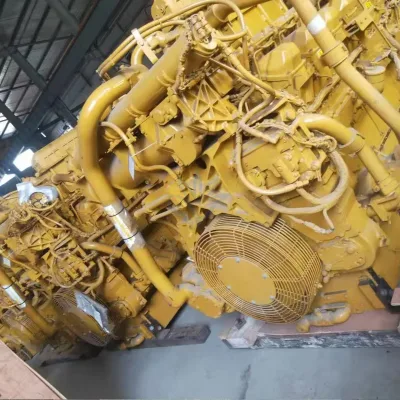


Superior/Good Quality Generator Set with Gas Engine Adapt to Multiple Scenarios/Purposes
$10000.00 - $100000.00
MOQ: 1 Pieces


Power Generator Gasoline Generator Electric Generator
$160.00 - $200.00
MOQ: 10 Pieces
Dezhou Chuangtao Mechanical and Electrical Equipment Co., Ltd.


Comprehensive Sourcing Guide
Strategic Sourcing Guide for Industrial Generator Sets
Understanding Core Technical Specifications and Variants
When initiating a procurement process for generator sets, the primary objective is to align the technical specifications of the equipment with the specific operational demands of the facility. The market presents a diverse array of configurations, ranging from small-scale units to heavy-duty industrial power plants. Based on current market observations, a critical distinction lies in the output type. Buyers must verify whether the unit provides AC Three Phase power, which is standard for most industrial manufacturing and energy applications, or DC output, which is less common and typically reserved for specific legacy or specialized systems.
The rated power capacity is another fundamental variable. Available units in the current supply chain span a vast range, with documented specifications indicating capacities from 3kW up to 2400kW. This wide spectrum allows for procurement flexibility, accommodating everything from small commercial backup needs to large-scale base-load power generation. The engine type is predominantly diesel, with specific models such as the 3412C and 20V190G appearing frequently in product listings. These models often feature a four-stroke cycle and are designed for high-efficiency operation, with observed generating efficiency figures around 42%.
Cooling mechanisms also vary significantly based on the intended environment and power density. While some units utilize wind cooling, which is suitable for lower power ratings or specific ambient conditions, high-performance industrial sets often employ water-cooled systems to manage thermal loads effectively. The rotation speed is a critical parameter for frequency stability; observed data indicates units operating at 1000 RPM, which typically correlates with a 50 Hz output frequency. Buyers must ensure that the voltage ratings match their grid requirements, as observed specifications include a broad range of 220V, 400V, 440V, 6300V, 6600V, 11000V, and 13800V.
Compliance, Certification, and Emission Standards
Navigating the regulatory landscape is essential for ensuring that purchased generator sets meet local and international safety and environmental mandates. Certification status serves as a primary indicator of compliance. In the current market, ISO certification is a frequently observed attribute, suggesting adherence to international management system standards. Additionally, CE certification is noted in several product profiles, indicating conformity with health, safety, and environmental protection standards for products sold within the European Economic Area. However, buyers should treat these certifications as observations of specific listings rather than universal guarantees for all available inventory.
Environmental compliance is increasingly critical, particularly for units intended for use in regions with strict emission controls. Specific product data highlights compliance with exhaust gas temperature limits, with observed values staying below 450 degrees Celsius. Furthermore, nitrogen oxide (NOx) emissions are a key metric; documented units demonstrate NOx emission levels below 250 mg/m³. These figures are vital for facilities operating in environmentally sensitive zones or those subject to rigorous industrial emission regulations.
Gas quality is another compliance factor for gas-powered generator sets. The heat value of the fuel gas is a determinant of engine performance and efficiency. Observed specifications indicate a requirement for gas with a heat value higher than 1100-1300 kcal/Nm³. To manage impurities in the fuel gas, suppliers offer both wet type and dry type gas purification systems. The selection between these systems depends on the specific impurity profile of the available fuel source and the required purity level for the engine's longevity. Buyers must verify that the selected purification system matches the specific gas composition of their intended site to prevent engine damage and ensure regulatory compliance.
Cost Drivers and Pricing Dynamics
The pricing structure for generator sets is influenced by a complex interplay of factors, including power capacity, brand reputation, customization requirements, and the complexity of the cooling and emission control systems. The observed price range in the market is exceptionally broad, spanning from approximately $83 to $900,000 USD. This variance reflects the difference between small, single-item units and large, custom-engineered industrial power plants.
Several specific cost drivers contribute to this wide range. First, the rated power is a primary determinant; units at the lower end of the 3kW to 2400kW spectrum will naturally command lower prices than those at the upper limit. Second, the inclusion of advanced features such as Famous Brand PLC control systems can significantly increase the unit cost. Third, customization plays a major role. While many units are available as standard items, the market supports customized configurations, including specific packing requirements like ISO containers or tailored dimensions.
The minimum order quantity (MOQ) also affects the unit economics. Observed data shows an MOQ range from 1 to 10 units. For buyers requiring a single unit, the per-unit cost may be higher due to the lack of bulk discounts. Conversely, purchasing within the 1-10 range may offer more favorable pricing tiers. Additionally, the origin of the product influences cost. Units originating from major manufacturing hubs in China, such as Guangdong and Jiangsu Nantong, often present competitive pricing structures due to established supply chains and manufacturing efficiencies. Buyers should note that while the base price is a significant factor, the total cost of ownership must also account for warranty terms, which are typically standardized at 1 year for many listed units.
Typical Applications and Operational Environments
Generator sets are deployed across a wide variety of sectors, each with unique operational requirements. The primary application areas identified in the market include manufacturing plants and the energy and mining sectors. In manufacturing environments, reliability is paramount to prevent production downtime. Units designed for these settings often feature self-starting capabilities and are categorized as common units, standby units, or emergency crew units. This categorization helps buyers select the appropriate redundancy level for their critical processes.
The physical environment of the installation site is another critical consideration. Most observed units are designed for land use, with specific classifications such as "ordinary" land use types. However, the operational conditions must be carefully matched to the unit's design. For instance, the cooling method must be suitable for the ambient temperature and airflow of the installation site. Wind-cooled units may be suitable for moderate climates, whereas water-cooled units are preferred for high-load applications or hotter environments.
Furthermore, the type of fuel and gas available dictates the application suitability. Units capable of processing gas with a heat value between 1100-1300 kcal/Nm³ are ideal for sites with specific biogas or landfill gas availability. The production rate of these gas-fueled units can range from 100 to 10,000 Nm³/hr per unit, making them scalable for various industrial processes. The versatility of these units allows them to serve thermal and power applications, providing both electricity and heat recovery potential in combined heat and power (CHP) scenarios.
Supplier Evaluation and Geographic Considerations
Evaluating suppliers requires a focus on their geographic footprint, after-sales support capabilities, and brand reputation. The majority of the observed generator sets originate from China, with specific manufacturing hubs identified in Guangdong and Jiangsu provinces. These regions are known for their robust industrial manufacturing bases. However, the global reach of these suppliers is evident in their showroom locations, which include the Philippines, Indonesia, Russia, and Thailand. This international presence suggests that suppliers have established logistics and support networks in these regions.
Brand name is a significant factor in supplier evaluation. "LUYUE" is a prominent brand observed in the market, often associated with specific model numbers like the 3412C. Compatibility with established brands like CATERPILLAR is also noted, indicating that some components or designs may be interoperable with existing fleets or maintenance protocols. Buyers should verify the "Compatible Brand" status to ensure that replacement parts and service procedures align with their current operational standards.
After-sales service is a critical differentiator among suppliers. High-quality suppliers offer comprehensive support, including the provision of engineers available to service machinery overseas. This capability is essential for international buyers who require on-site technical assistance for installation, commissioning, and troubleshooting. The availability of such services can significantly reduce downtime and ensure the longevity of the investment. Buyers should explicitly confirm the scope of these services, including response times and the geographic coverage of the engineering teams, before finalizing a procurement agreement.
Quality Control and Long-Term Procurement Strategy
Ensuring the quality of generator sets requires a rigorous approach to inspection and verification. One of the most critical quality control measures is the outgoing inspection process. In the current market, the provision of video outgoing-inspection is a high-confidence fact, allowing buyers to visually verify the condition and assembly of the unit before shipment. This transparency helps mitigate the risks associated with long-distance shipping and ensures that the product matches the agreed specifications.
Packaging standards are also vital for protecting the equipment during transit. Observed data indicates that units may be packed in customized configurations or standard ISO containers. The choice of packaging should be aligned with the shipping method and the fragility of the internal components. Additionally, the standard dimensions of the units, such as 7.2×1.9×3.2m or 850024003400 mm, must be considered for site planning and logistics.
For long-term procurement, buyers should prioritize suppliers who offer customization options. The ability to tailor the Generator Set to specific site conditions, such as voltage requirements or cooling methods, ensures a better fit and higher operational efficiency. The warranty period, typically observed as 1 year, provides a baseline for manufacturer confidence, but buyers should negotiate extended warranty terms or service level agreements (SLAs) for critical applications.
Finally, buyers must maintain a continuous evaluation of the supplier's production capabilities. The production rate of gas-fueled units, ranging from 100 to 10,000 Nm³/hr, indicates the scale of manufacturing. Ensuring that the supplier can meet the required production volume and lead times is essential for project timelines. By combining technical verification, certification checks, and a thorough assessment of after-sales support, buyers can secure a reliable supply of generator sets that meet their operational and financial objectives.
FAQs
What certifications do generator sets typically have?
Generator sets often carry ISO and CE certifications. These indicate adherence to international management standards and European safety requirements, though specific listings vary and should be verified per unit.
Can I find generator sets with water cooling?
Yes, water-cooled models are available for high-performance applications. This cooling mode effectively manages thermal loads in industrial settings compared to wind-cooled alternatives used for lower power ratings.
What is the rated power range for these units?
Rated power spans from 3kW up to 2400kW. This wide spectrum accommodates diverse needs, from small commercial backup requirements to large-scale base-load power generation for heavy industries.
How is the output type configured for industrial use?
Most units provide AC Three Phase output suitable for manufacturing. Some specialized or legacy systems may offer DC output, so buyers must verify the specific configuration against their grid requirements.
What is the warranty period for these generator sets?
The standard warranty period is typically one year. This baseline coverage reflects manufacturer confidence, but specific terms may vary by supplier and should be confirmed during procurement negotiations.
Are customized packing options available for shipping?
Customized packing is available, including ISO containers. Buyers can request tailored dimensions or packaging to suit specific logistics needs and protect equipment during transit from manufacturing hubs.
Which gas purification systems are offered for gas units?
Both wet type and dry type gas purification systems are offered. The choice depends on the fuel source impurities, ensuring engine longevity and compliance with specific site gas quality requirements.